
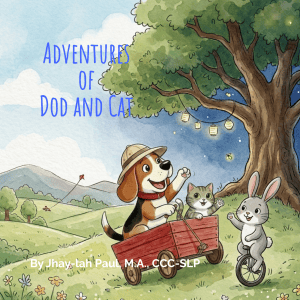
Join two best friends on big adventures built for early language, speech sounds, and literacy success! The Dog and Cat series is a charming collection of children’s books beautifully illustrated in a classic, soft storybook style.
Each book follows a lovable beagle named Dog and his clever companion, Cat, as they navigate the world around them—making friends, sharing picnics, and zipping along in their trusty red wagon.
Crafted with intentional language targets, this series is uniquely designed to grow with your child’s emerging communication and reading skills:
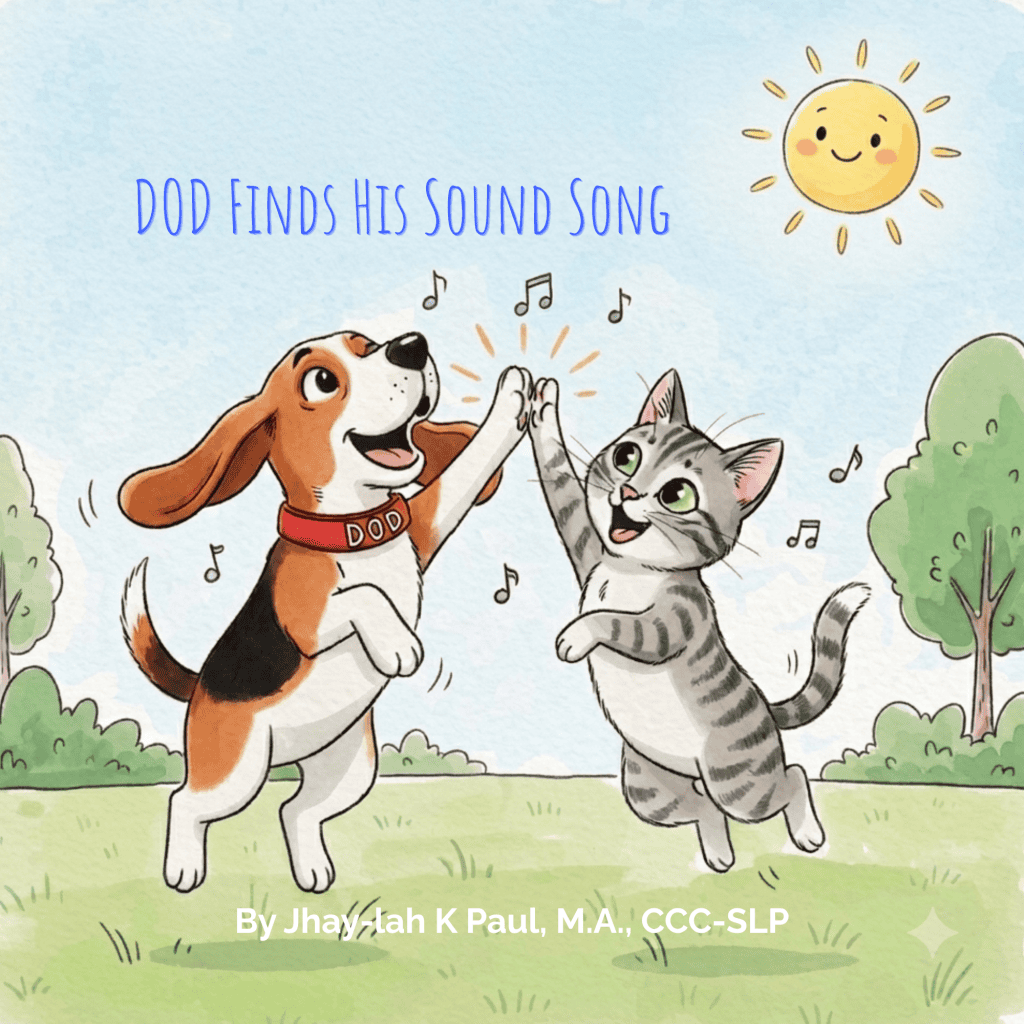
Book 1: Dod the Dog
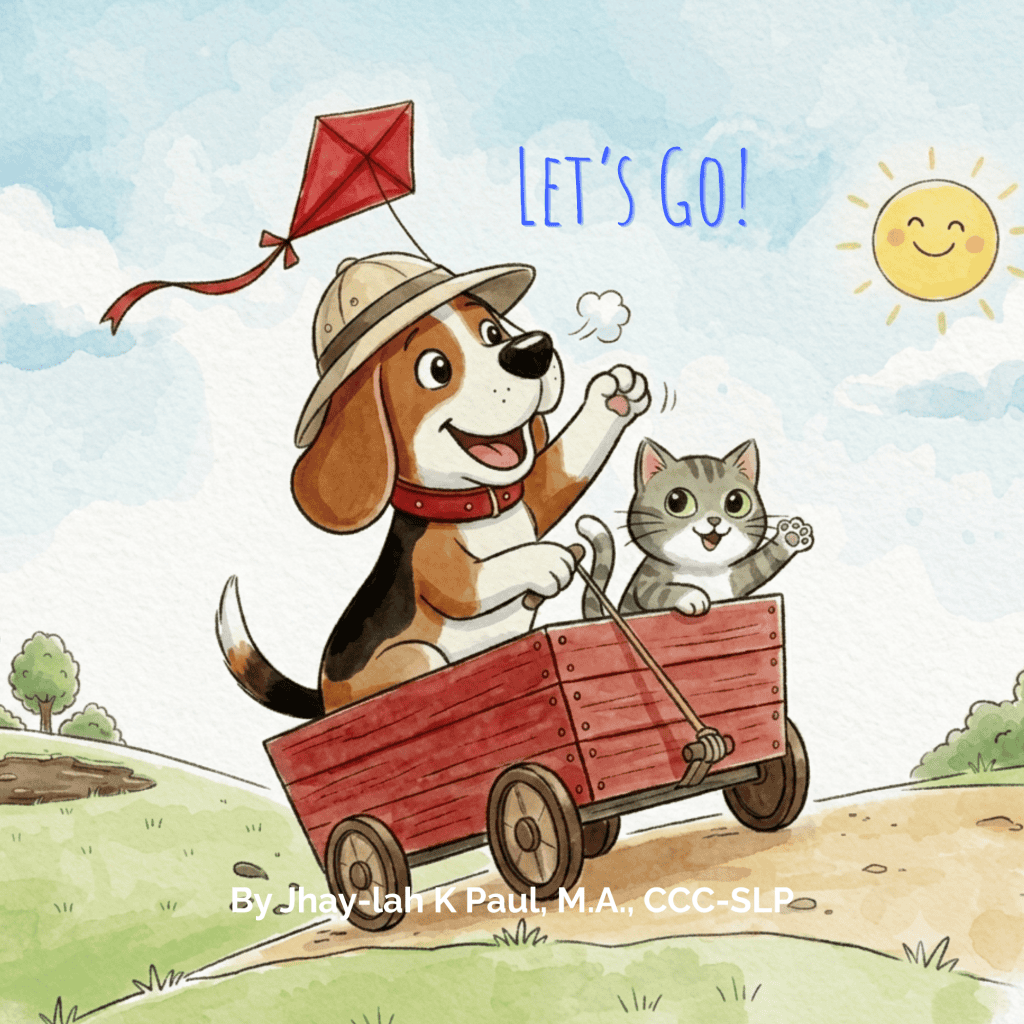
Book 2: Let's Go!
Perfect for toddlers, preschoolers, early readers, and families looking for high-quality, speech-supportive literature. Packed with rhythm, rhyme, and playful repetition, the Dog and Cat series makes learning to talk and read an absolute joy.
Get ready, get set… Let’s Go!
Dialogic reading strategies are used to increase conversations between parent and child about the book.
Specifically, focus on rhyming and blending sounds together.
Rhyming helps children develop the skills they need to be successful in reading and spelling. The definition of a rhyme is when two different words end with the same sound.
Blending is a strategy used to help children break down words. To blend words together, children use the sounds that match the letter to “sound out” the word. When blending, children are focusing on individual sounds and combining those sounds to make a word.
Pre-literacy skills need to be facilitated in young children by providing strategies and engaging activities to support children as well-developed and functional readers (De Witt & Lessing, 2018, p. 1845). Pre-literacy involves a “set of skills, knowledge and attitudes to formal reading and writing.” Pre-literacy skills mainly focus on developing “emergent writing skills” and “phonological awareness” (De Witt & Lessing, 2018, p. 1846).
A phonological process is a speech pattern that young children sometimes use as they’re learning to talk. In the process of fronting, a child replaces sounds made in the back of the mouth (/k, g/) with sounds made in the front of the mouth (/t, d/).
For example, a child might say “tat” instead of “cat”, or “dough” instead of “go.”
With time, practice, and the right support, children can learn to move those sounds back where they belong!
Fronting is a common and expected process in early speech development, but when it persists past a certain age (typically 3.5-4 years), you should seek support from a speech-language pathologist (SLP).